“We have the largest conference system with the lowest headcount of anybody. Our event scaled 100x in 3 years, and it would not have been possible without Glide.”
A lot of the world has heard of Davos, more specifically, the annual meeting of the World Economic Forum (WEF), which brings together a few thousand of the world's economic leaders in Davos, Switzerland, every January.
What most people don’t know, however, is that the actual WEF meeting is just a fraction of everything that actually happens in the town of Davos during that intensive week. In 2026, there are thousands of external events happening in parallel to the conference, with around 20, thousand attendees.
Tech entrepreneur Mark Turrell has been attending Davos for the last 20 years and might know more about these events than anyone else. It’s that insight that inspired him to create the unDavos Summit.
The unDavos Summit is an independent conference with 3,000 delegates, 100 sessions, and over 400 speakers. In addition, the side event world, known as DavosWeek, has over 1,200 panels, networking events, and dinners, and this too is curated by Mark and his team, making it the must-have resource for Davos attendees.
In 2026, Davos Week saw more than 18,000 people and over 1,200 events. And Mark runs operations on a customized stack of Glide apps.
Using Glide apps to coordinate the conference
The unDavos Summit runs on a suite of Glide apps Mark developed with the help of Abdo Awad at LessCode Agency.
- DavosWeek: This app is the public-facing conference application that coordinates events, speakers, and networking opportunities for all unDavos attendees as well as the greater ecosystem of side events in Davos.
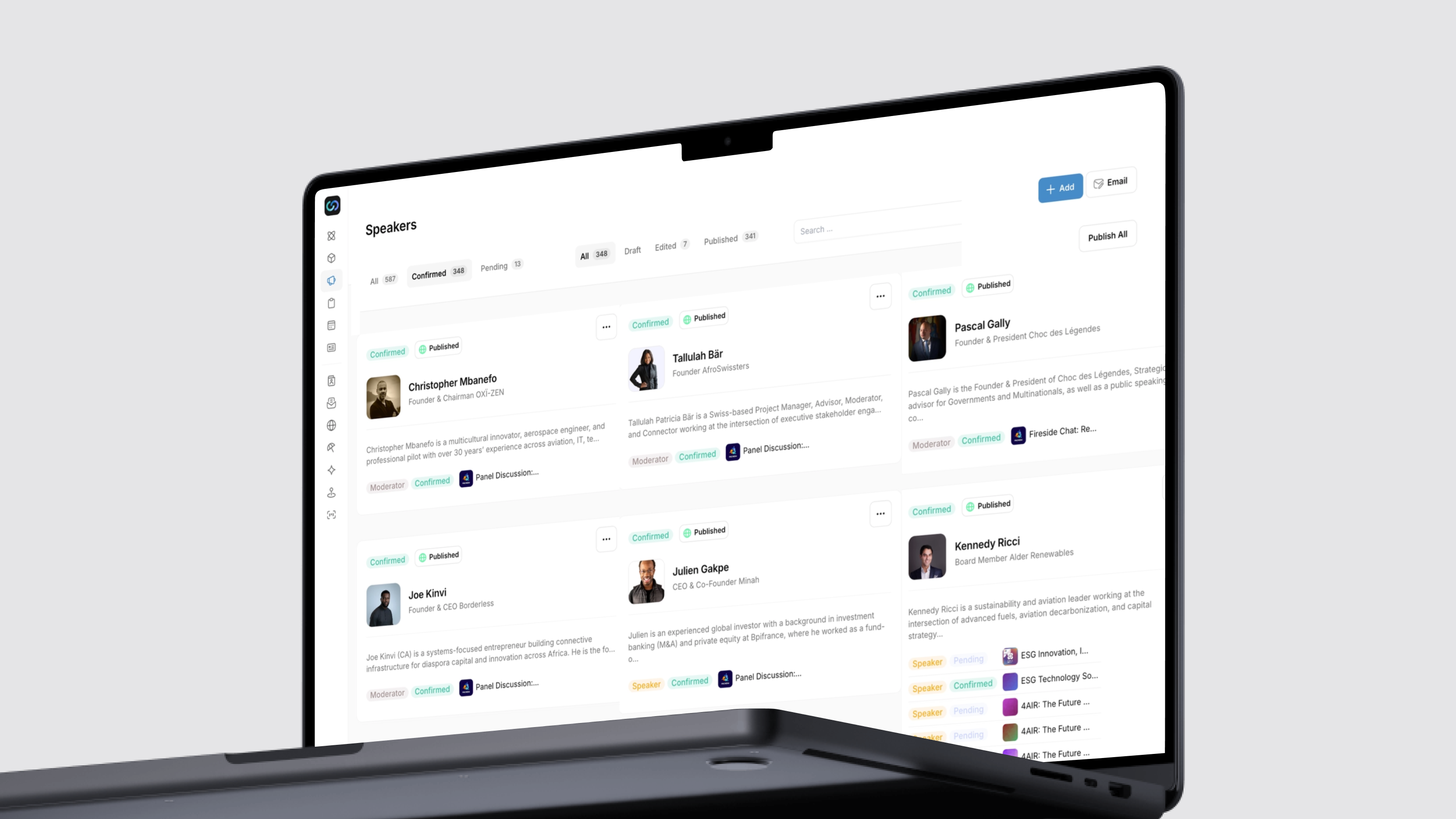
- Conference Management System: Behind the scenes, Mark coordinates the unDavos Summit with a suite of apps built on Glide that conduct all of the conference’s operations.
“There's a lot of Glide within unDavos,” said Abdo, “It's the major source of truth for the data that unDavos deals with, and so Glide is the core of our tech stack.”
The DavosWeek App
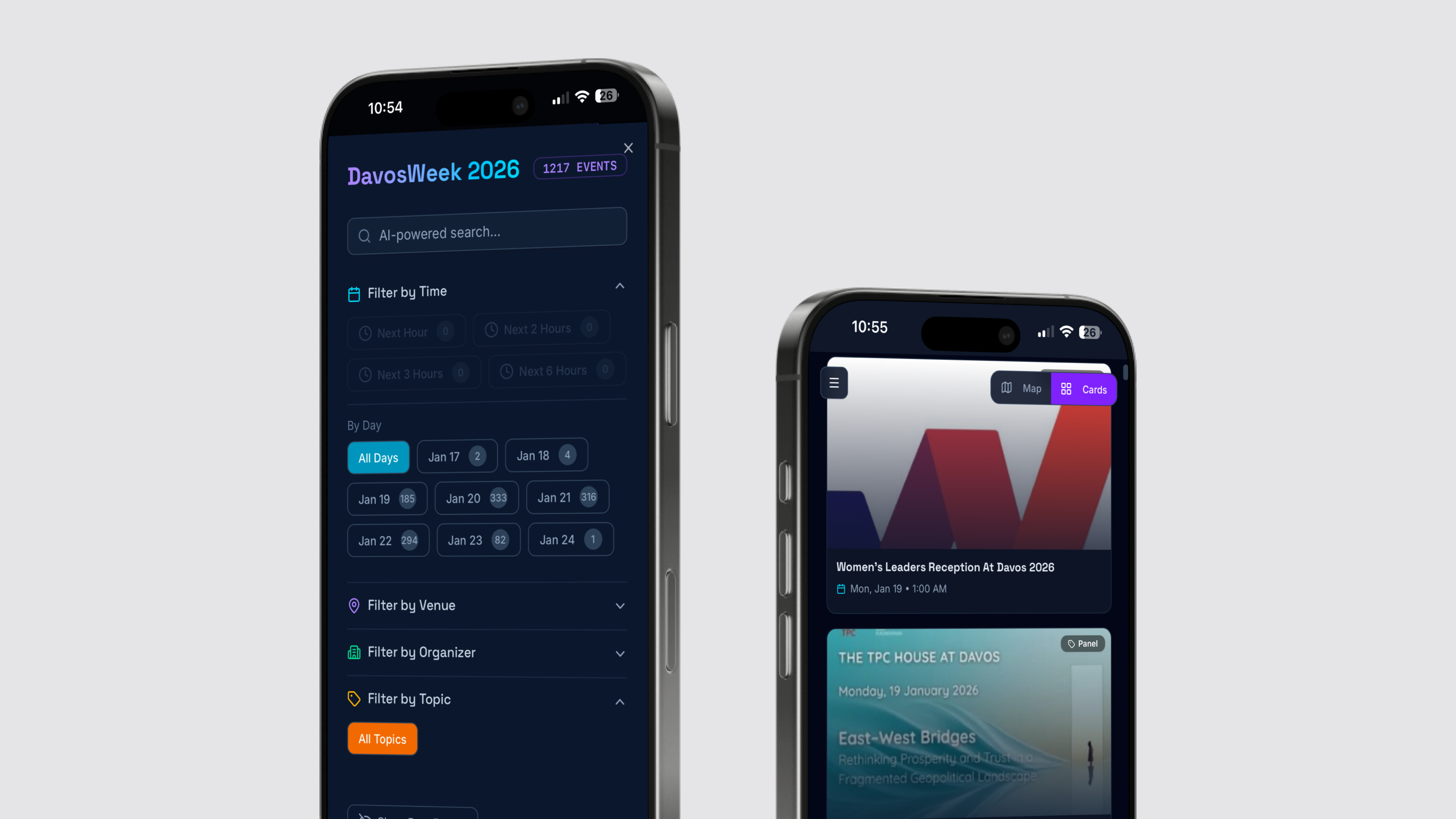
The DavosWeek app makes all side events and unDavos programming available to a global audience. Glide manages all the data in the DavosWeek app, making information on over a thousand events available for attendees. They then connected the Glide back end to a Replit front end for added design options.
“Glide makes beautiful apps, but for the external unDavos community, I wanted something that would look more like a consumer app,” explained Mark. Integrating Replit with their Glide app allowed them to benefit from the greater design flexibility of vibe coding while still using Glide to ensure the security of their data and the reliability of their app infrastructure.
“The first year we built the DavosWeek app, we had about 6,000 users, spending an average of 5.5 minutes per session, and about 1,000 events. This year was even more,” said Abdo. “We’ve used nearly every feature Glide has. We integrated AI to tag events and suggest new events.”
It has a discovery feature Mark jokingly refers to as “unDavos Tinder”. “The app uses AI to generate cards, so users can swipe through people, events, showcases, and tips for the conferences, all customized based on the weight of what they were searching for in the app,” explained Abdo. Using Glide AI, DavosWeek also learns from users’ search and activity on the app and curates suggestions for which of the thousands of available events might interest them.
The Conference Management System
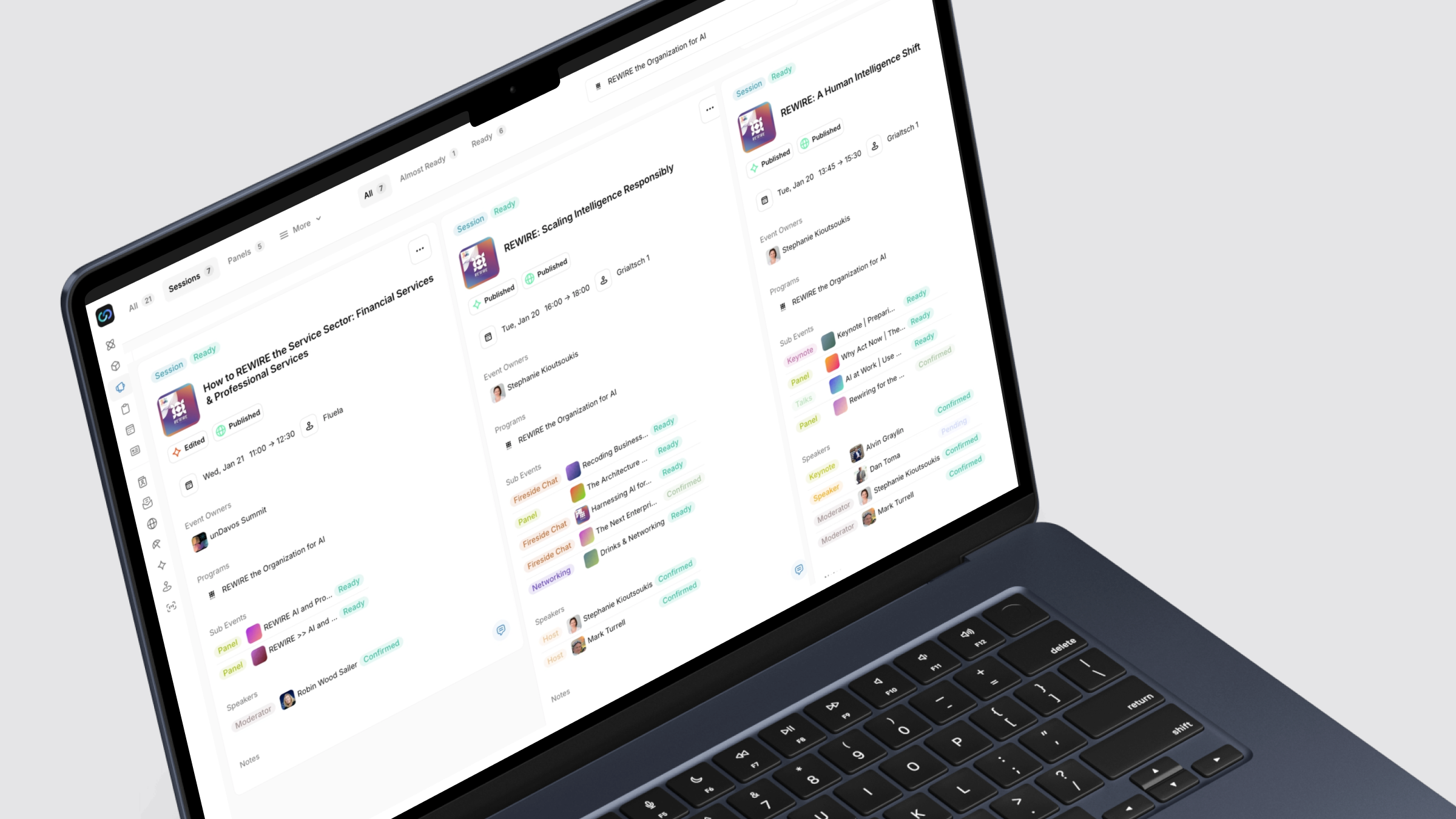
On the organizational side, Mark uses multiple Glide applications to run operations. “The most important use of Glide is the Conference Management System,” said Mark.
“We run a 3,000-delegate conference with 400 speakers and hundreds of sessions, all managed with a set of Glide apps.”
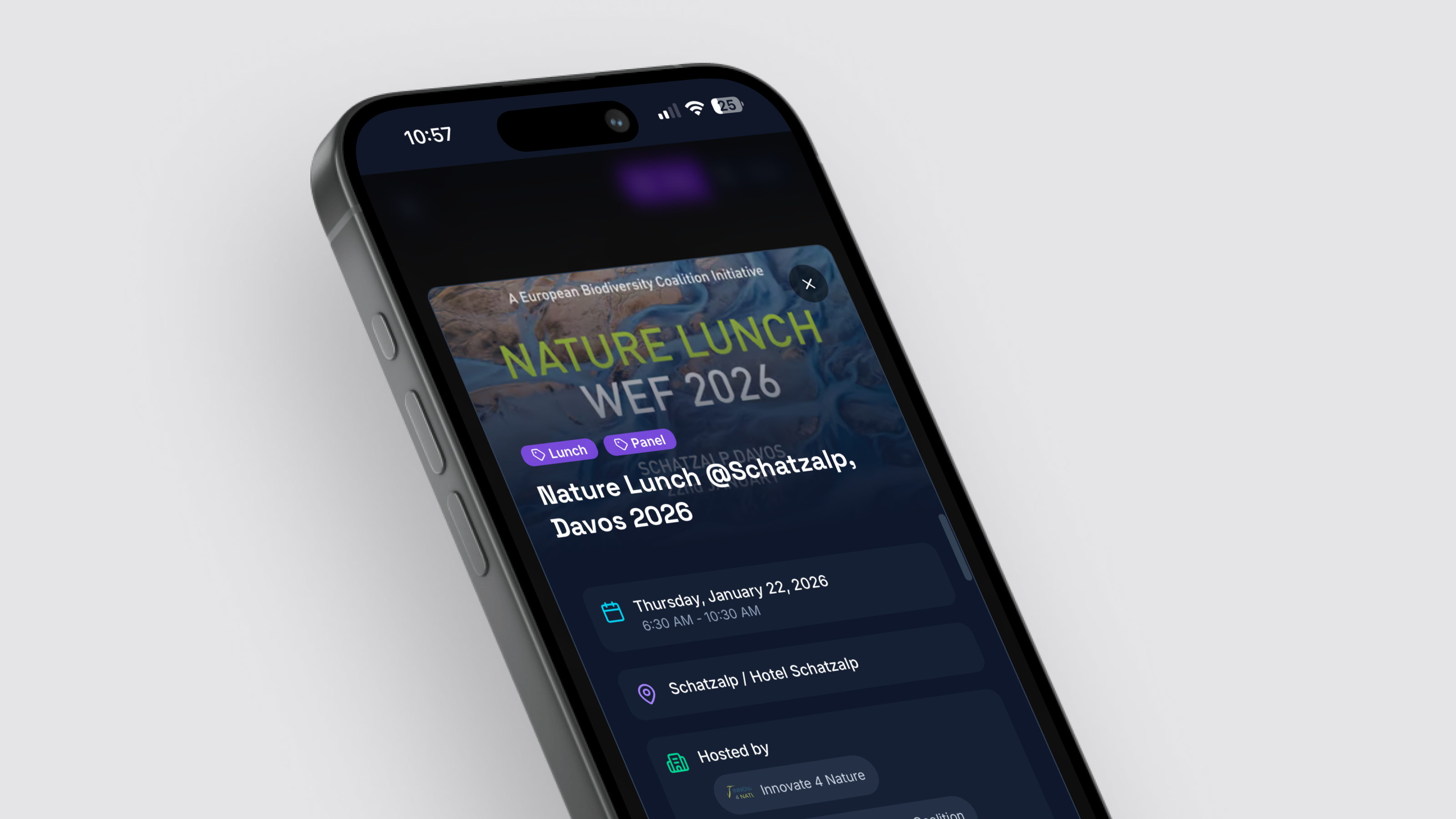
These connected apps are used to organize venues, rooms within those venues, time slots, sponsors, speakers, workshops, panels, and sessions. The Glide system integrates with Webflow to update their website, Luma to handle registration, and Clay for data enrichment.
They also integrated with CredsNow to issue unique badges to participants. Participants could scan a QR code on the badges with their app and get connected immediately. “Glide was the point of truth with integration to CredsNow, and we were able to set it up incredibly quickly. The integration was basically done on Sunday before the event started,” Mark explained.
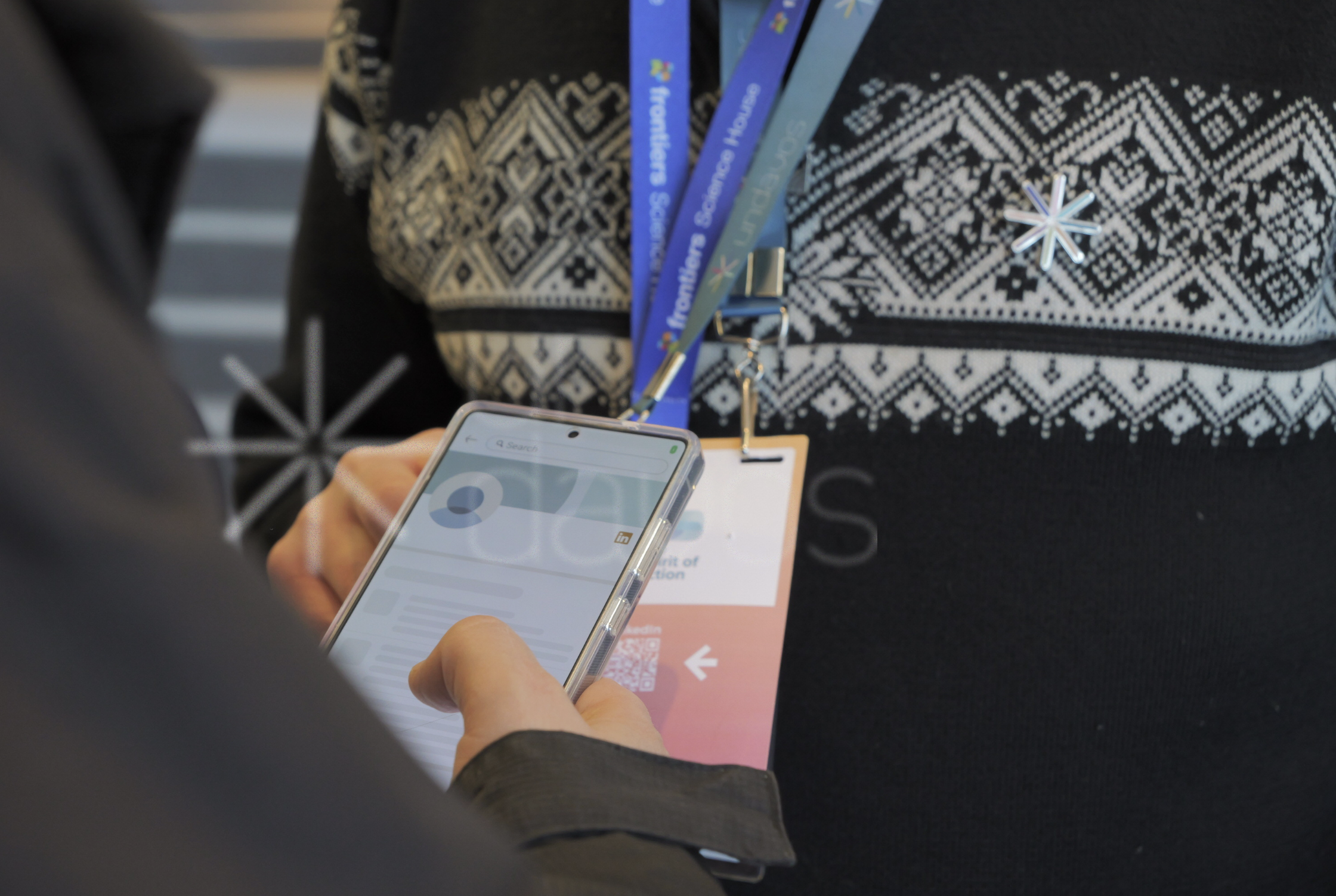
This stack helps Mark select the most qualified speakers, panelists, and attendees for all their sessions. When attendees register through Luma, they can give permission to connect their LinkedIn data. They used AI to scrape that data and assess their match to the event topic, marking them as red, yellow, or green. This significantly sped up Mark’s session organizing.
“Using Glide to manage the conference probably saved us needing to hire 10 or 12 different people,” said Mark. “In addition to that, it would be impossible to scale, and we'd have more holes in between the processes.”
“Before, we had a Google Form that people would fill out if they wanted to speak or host a panel. Now it's a Glide app.”
“When I speak with colleagues in the space, either they can't manage anything this big, or they need to have a huge headcount with lots of spreadsheets, and lots of human-to-human coordination. We used to operate on spreadsheets four years ago, but it's unmanageable at this scale. With this Glide system, I was able to manage almost everything on my phone. It's just phenomenal.”
For next year’s conference, they’ll be adding a moderator role to the platform using Glide’s role-based access control. “We’ll set permissions so the moderator can see all the speakers and message them all in one click,” said Mark. With WhatsApp integration, panelists and speakers can communicate and coordinate during the conference.
For Mark, it was critical that the conference management system work equally well on mobile and on desktop. “For me, by 7:45, my day has already started, and I'm running the conference at the same time. If I learn we fill a time slot on Tuesday, I can go into my app and do it immediately. I can change the presentation time in one click, and it propagates through everything.”
“It’s fantastic. We'll continue to invest in the platform next year and push the boundaries of what we can imagine with Glide.”
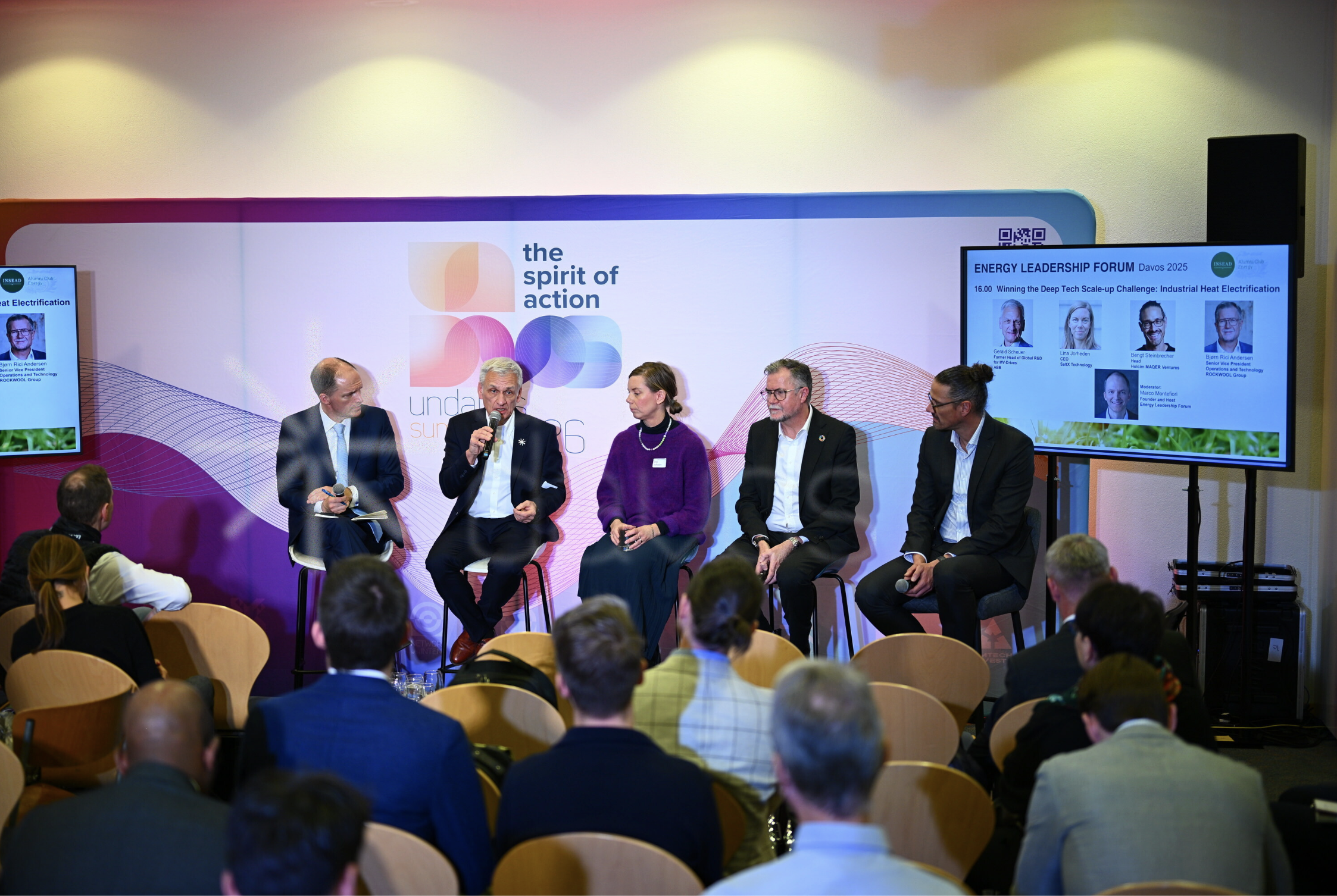
“We have all kinds of topics: Finance. Digital assets, ESG, future of work, future of education, future of media, future of lying, future of leadership boards, quantum computers, robotics, space,” explained Mark. “This year we had over 10,000 people watching the livestream. It's just massively fun.”
Working with LessCode Agency
“I needed a solution. Thankfully, we have a partner in Abdo, a tech provider platform in Glide, and the capacity to deliver it.”
Mark built the first version of the conference app himself. For the next version, he enlisted the help of Glide Expert Abdo Awad and his agency, LessCode. “What I found with Abdo was that he quite quickly understood the solution areas that I wanted, and was very responsive with coming back with ideas and concrete solutions. I didn’t want a developer; I needed a solution to my problem. I think one of the things that blew me away was how capable Abdo was with customizing our app to suit any specifications,” said Mark.
“Glide made it very fast to do things that I wanted,” he explained. “But at a point, I realized, if I have a choice between getting $100,000 in revenue by speaking to a couple of sponsors or spending that time doing a detailed product description for a new feature, I’m going to need to spend my time on the sponsorships. It is a huge benefit that I can just hand everything over to Abdo, and it will get done."
Expanding use of the Conference Management System
With the Glide infrastructure in place to easily host and coordinate a complex conference, Mark found himself talking to peers in the space and realizing the software they built could be helpful to more conference teams. “We already have other customers wanting to use the conference management system because Abdo rebuilt our Glide system to be able to work for multiple groups,” he explained.
“In this current form, it's a multi-conference management system,” said Abdo. “This year, the Human Change Foundation used our platform. They could manage their own conference completely independently without mixing their data with ours.” Mark is looking at events of a similar scale that have complex moving pieces or a high volume of side events, such as the U.N. General Assembly (UNGA), New York Climate Week, the Future Investment Initiative (FII) in Saudi Arabia, and the Munich Security Conference.
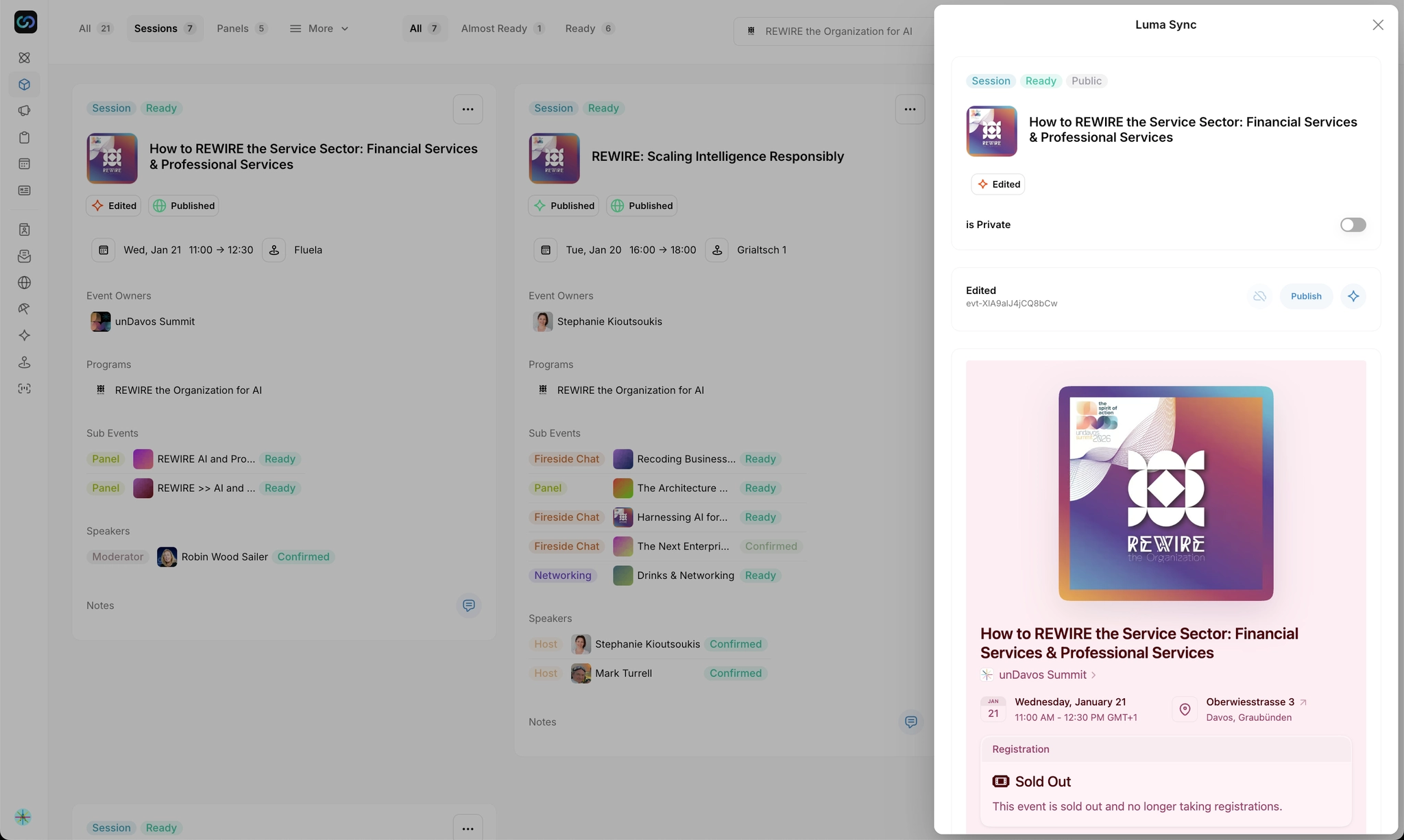
The Webflow front end and Luma calendar are both managed from the Glide app. That way, when another conference uses the app, they don’t need to have their own credentials for either platform. They can publish an event to their Luma calendar and set up registration questions in their Luma event directly from Glide.
If they update their speakers in the Glide app, it will publish automatically to the Webflow end without them having to log in. They can control their CMS, update the text on the hero section of their website, and collect testimonials, all from within the Glide app.
Continuing to grow the unDavos Summit
Mark and Abdo plan to significantly expand the capabilities of their conference management system ahead of next year’s Davos Week and hope the app will be helping even more organizations host their own events by then.
“Davos was one of the first mega conferences that got taken over by high-quality side events,” explained Mark. Twenty years ago, there was really only one event in Davos, the World Economic Forum. Fast forward to today, Davos probably has 20 to 25 thousand people in town during the week. The World Economic Forum only has 2,750 delegates. The rest of the people have to do something.”
“That’s where we come in,” he said. “With the DavosWeek app and unDavos, we can get more people into the room together. It's kind of serendipity mountain, you never quite know who you're gonna meet.”